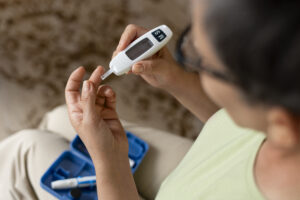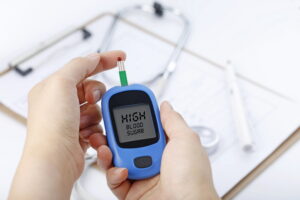
Hi everyone, this lesson is on the characters and disorder of type 1 diabetes. Before we get into the characters and disorder, let’s talk about what type 1 diabetes is. Type 1 diabetes is an autoimmune case forcing ruin of pancreatic beta cells that leads to a lack of insulin construction and harmed glucose control.
autoimmune nature and insulin production impact
so it’s an autoimmune condition, which means that the patient’s own immune system attacks the patient’s own tissues, and in this case, it attacks the cells within the pancreas, the beta cells, which are responsible for producing insulin. and once enough beta cells have been destroyed, it’s going to cause the pancreas to not be able to produce enough insulin to regulate glucose, so there’s going to be impaired glucose regulation.
effects of insulin lack on glucose and fat metabolism
so lack of insulin is going to lead to very high levels of glucose, and this lack of insulin is also going to lead to increased fat breakdown because insulin itself induces fat formation. if there’s no insulin present, there’s going to be an elevation of another hormone known as glucagon, and this is going to lead to increased fat breakdown and then eventual increased ketone production.
characteristic signs, symptoms, and risk factors
so this is going to lead to some characteristic signs and symptoms we’re going to talk about in this lesson. so what are some of the risk factors for actually getting type 1 diabetes? family history is going to be a big one, so there is an association between certain hla types and getting type 1 diabetes and other autoimmune conditions, and one of them that i mentioned here is celiac disease, so individuals with type 1 diabetes are more likely to have celiac disease, so there is an association.
epidemiology and age of onset
now, what is the epidemiology of type 1 diabetes? out of all cases of diabetes, 10% of them are going to be type 1 diabetes. so type 2 diabetes is going to be the most common type, representing approximately 90% of cases, and the onset of type 1 diabetes is most often going to occur early in life, usually prior to early adulthood, so you’re going to see it more often occurring in children or adolescents.
differences in onset and presentation compared to type 2 diabetes
so it’s going to differ in its age of onset compared to type 2 diabetes, and what’s noted here is that the onset and the symptoms of type 1 diabetes is going to present suddenly, and it’s often going to present with what we call diabetic ketoacidosis. we’re going to talk a bit about diabetic ketoacidosis and the characters and disorders of diabetic ketoacidosis in this lesson as well.
reason for sudden symptoms in type 1 diabetes
now, signs and symptoms: the reason that signs and symptoms of type 1 diabetes occur often times suddenly, as opposed to type 2 diabetes where they often times occur insidiously, is because the immune system continues to attack and destroy those pancreatic beta cells we talked about before, and eventually once enough of those pancreatic beta cells have been destroyed, usually representing a around 90 percent of them, then we’re going to see very high levels of glucose occurring, and then we’re also going to see some of these signs and symptoms as well.
polyuria and related urinary symptoms
now, some of the signs and symptoms that can occur in type 1 diabetes include polyuria. polyuria is an increased urination, more specifically, urinating more often, so increased frequency of urination and increased urine volume. so you’re going to the washroom more often, and then you’re urinating more volume of urine each time you go, and this may also present as nocturia or enuresis.
nocturia is urinating at night time, so the patient often will have to wake up in the middle of the night to urinate, and this can happen many times as well, and then enuresis is bedwetting. so because this can occur in children, bedwetting can occur, and it’s often going to be a secondary enuresis, which means that the child has developed where they do not bed wet anymore, and then all of a sudden they start to bed wet again, and this can also be another finding in patients with type 1 diabetes.
explanation of polyuria mechanism
now, the reason that polyuria and some of these other symptoms occurs is because of high levels of glucose. now, normally, the kidneys reabsorb glucose, so the body wants to hold on to glucose; it is an energy source, but when there is too much glucose, the levels of glucose are too high, that glucose gets into the urine, and then water follows that glucose, so glucose will act like a little sponge to pull water, and then that’s why we’re going to see patients with lots of episodes of urination and lots of urine volume.
polydipsia and its causes
now, polydipsia is also a related finding in type 1 diabetes. polydipsia is increased drinking, so patients are going to feel very thirsty, and they’re going to feel very thirsty a significant amount of time. the reason they feel like this is because of all of those increased urine losses, so because they’re losing so much volume, so much fluids, they’re going to feel very thirsty, and they’re going to drink a lot of fluids to compensate.
polyphagia and hunger in type 1 diabetes
type 1 diabetes patients can also experience polyphagia. now, polyphagia is increased consumption of food, so they feel very hungry, and they eat more than usual, and the reason is because of that lack of insulin we talked about before. so because there’s no insulin, insulin-sensitive cells are not going to be exposed to insulin, so they’re not going to be able to access glucose.
so insulin-sensitive cells need glucose in order to bring glucose into those particular cells, because those cells are not able to access that glucose, they’re going to make the patient sense that they are hungry, so this is the reason why we can see polyphagia.
weight loss and catabolic state
now, we can also see weight loss occurring in type 1 diabetes. this is often significant weight loss that can occur, and with type 1 diabetes patients, as opposed to type 2 diabetes patients, type 1 diabetes patients are going to be thinner on average, so because they’re lacking insulin, they are not able to produce or synthesize fats like they should be, so they often times lose weight.
and again, this is going to be due to lack of insulin that leads to a catabolic state, catabolic meaning that things are being broken down as opposed to being built up, as would be in an anabolism state.
dehydration signs and effects
and dehydration: we can often see dehydration occurring, so this dehydration can be due to that polyuria, losing lots of volume from that excessive urination. this can lead to dry mucous membranes, so looking at the tongue, you can see the tongue is very dry.
We can also see that if the patient were to check their skin, if they were to pull up on their skin, it doesn’t go down as easy as before. There’s poor skin turgid. the eyes can also be sunken, and then there can be dry maxilla, so their armpits can be dry, they may not be producing sweat, and then they may have no tears in some severe cases, so the patient may feel that their eyes are very dry.
and then the dehydration can also lead to hypertension, which is a low blood pressure, so patient may feel dizzy as well.
blurred vision and diabetic retinopathy
patients with type 1 diabetes can also experience blurred vision. the blurry vision can be due to increased glucose levels that cause osmosis and swelling of the lens of the eye, which can cause blurring of their vision, but can also be due to diabetic retinopathy, which is a complication of long-standing diabetes in general, so we’re going to talk a bit more about this later on in this lesson.
fatigue and lethargy in type 1 diabetes
we can also see fatigue and lethargy occurring in type 1 diabetes, feeling tired, having low energy maybe a common symptom of diabetes, and this is thought to be due to increased glucose levels due to lack of insulin.
increased risk of infections
now, patients with type 1 diabetes can also experience increased risk of infections, so they may see increased infections or increases in infections. diabetes inhibits immune cell function.
this can occur in both type 1 diabetes and type 2 diabetes, so we can see patients having increased respiratory tract infections, but more specifically, they can often have increased fungal and yeast infections, particularly oral and vaginal yeast infections.
and the reason is because the yeast candida albicans that causes a lot of these yeast infections proliferates when exposed to higher levels of glucose. this is a reason why we can see increased risk of yeast infections in particular, and there can also be delayed wound healing.
impaired wound healing in diabetes
so wound healing is impaired in diabetic patients. this is due to poor circulation that may develop during diabetes disease progression.
diabetic ketoacidosis overview
diabetic ketoacidosis: so now that we’ve talked about some of those general character and disorders of type 1 diabetes, let’s talk about diabetic ketoacidosis.
So in type 1 diabetes, there can be diabetic ketoacidosis that can arise, and the reason is because in type 1 diabetes there is a lack of insulin. Insulin construction is severely agreed or completely lacking.
This can start to increase blood glucose, and it can also point to increased ketone production due to that increased fat breakdown, and we’re not going to see this in type 2 diabetes because there’s still insulin being present in type 2 diabetes to inhibit glucagon.
so insulin forbids glucagon. If there’s no insulin about, glucagon is running to increase. This is another hormone that’s mostly the opposite of insulin, so glucagon increases, and it’s going to start to increase fat breakdown, so we’re going to get increased ketone construction, and because of that steep ketone body construction, this can point to acidosis.
so these three—increased blood glucose, increased ketones, and increased acidosis—lead to a condition we call diabetic ketoacidosis: diabetic because there’s increased blood glucose, keto because there’s increased ketone production, and acidosis because there is acidemia or the blood is acidotic.
so we can see diabetic ketoacidosis oftentimes being a presenting issue in type 1 diabetic patients.
Characters and disorder of diabetic ketoacidosis
so some of the character and disorder of diabetic ketoacidosis are going to include some of those signs and symptoms we talked about before: polyuria, Polynesia, fatigue—so those are going to be common in diabetic ketoacidosis as well, but we’re also going to see nausea and vomiting occurring in diabetic ketoacidosis.
it’s often going to be severe nausea and vomiting, and often times a patient vomits so much that they vomit basically everything out and they are left with dry heaves.
this can occur in type 1 diabetic patients who are in dka or diabetic ketoacidosis, and the reason is because acidemia causes nausea and vomiting.
nausea and vomiting can become so bad in these patients that they can often times lead to a mallory-wises tear, where there’s a bit of a tear, more superficial tear, in the esophageal mucosa leading to a bit of blood in their vomit, or it can be so bad that they can actually rupture and tear through their entire esophageal wall, causing boerhaave syndrome.
so there are a couple of complications that can occur from severe nausea and vomiting from diabetic ketoacidosis.
mental state changes in diabetic ketoacidosis
now, another very important finding in diabetic ketoacidosis is mental state changes.
so often times, patients can have decreased alertness or awareness, decreased concentration, they can be confused, they can have decreased level of consciousness, and they can even go into a coma.
so these can be very, very severe complications, and they are very important to recognize in patients with diabetic ketoacidosis, and it may occur in children and adolescents due to cerebral edema, so their brain starts to swell due to some electrolyte changes, and this is going to be a very, very important finding to note.
abdominal pain and fruity breath in dka
now, abdominal pain is also another very common symptom in diabetic ketoacidosis.
this is going to be a severe abdominal pain with diffuse pain, so it’s going to occur throughout their entire abdomen.
this is again caused by diabetic ketoacidosis, and then patients who are in ska can also have a fruity breath, and this fruity-smelling breath is due to increased ketone body production, so this is the reason why we can see this as well.
breath changes in diabetic ketoacidosis
breath changes: and there can be some breathing changes that can occur in late diabetic ketoacidosis as well. this is called kussmaul breathing.
so kussmaul breathing is a pattern of increased volumes of breath, so there’s often deep breathing or hyperventilation, and often times the breath can be labored.
so if you look at this diagram here, we can see this lighter gray line, and this is going to be tidal volume or tidal breathing, and with kussmaul breathing, which is this darker line, we can see that there is increased volume of exhalation and increased inhalation, so we can see that there is going to be hyperventilation or deeper breathing, increased volumes of breath with kussmaul breathing, and the reason that there’s increased volume of breaths is because the patient is trying to blow off that acid, so this breathing change is going to be due to acidosis.
complications of type 1 diabetes
now, there are particular complications of type 1 diabetes i want to mention here, and these are going to be the same as was noted in my type 2 diabetes lesson, but i want to show them here for completeness sake.
so diabetic retinopathy can arise in type 1 diabetic patients, and this is again to running use issues with blurry vision, vision loss, blindness, and can also point to increased risk of cataracts and glaucoma later in life.
diabetic nephropathy is also another complication of type 1 diabetes and type 2 diabetes, and this is running to start to characterize disorders of chronic kidney disease, and oftentimes kidney failure and eventual dialysis.
and then we can also see diabetic neuropathy occurring, so this is going to lead to paresthesias, which are numbness and tingling emotion in different parts of the body, so often times it’s going to start in the feet and the toes, and it can work its way up into different parts of the body closer to the core.
and because of this diabetic neuropathy, the patient’s not able to sense any injuries that they may experience, and because of that poor blood circulation we talked about before with that delayed wound healing, they have increased susceptibility for getting amputations.
and some other associated conditions include gastroparesis, which is stomach paralysis. this is tied in with the neuropathy, so this is a neuropathy of the vagus nerve.
so this can lead to nausea and vomiting that is chronic.
patients with diabetes in general are at an increased risk for coronary artery disease due to vascular changes.
they’re also at an increased risk for stroke, and they’re also at an increased risk for dementia later on in life as well.
so you can see that many of these complications are very devastating, and there can be other associated conditions with diabetes as well, including type 1 diabetes and type 2 diabetes that i don’t mention here, but these are the big ones i wanted to mention.
closing remarks and further learning
so if you want to learn more about diabetes, type 1 diabetes or type 2 diabetes, please check out my full lessons on those topics, and if you haven’t already, please like and subscribe for more lessons like this one.